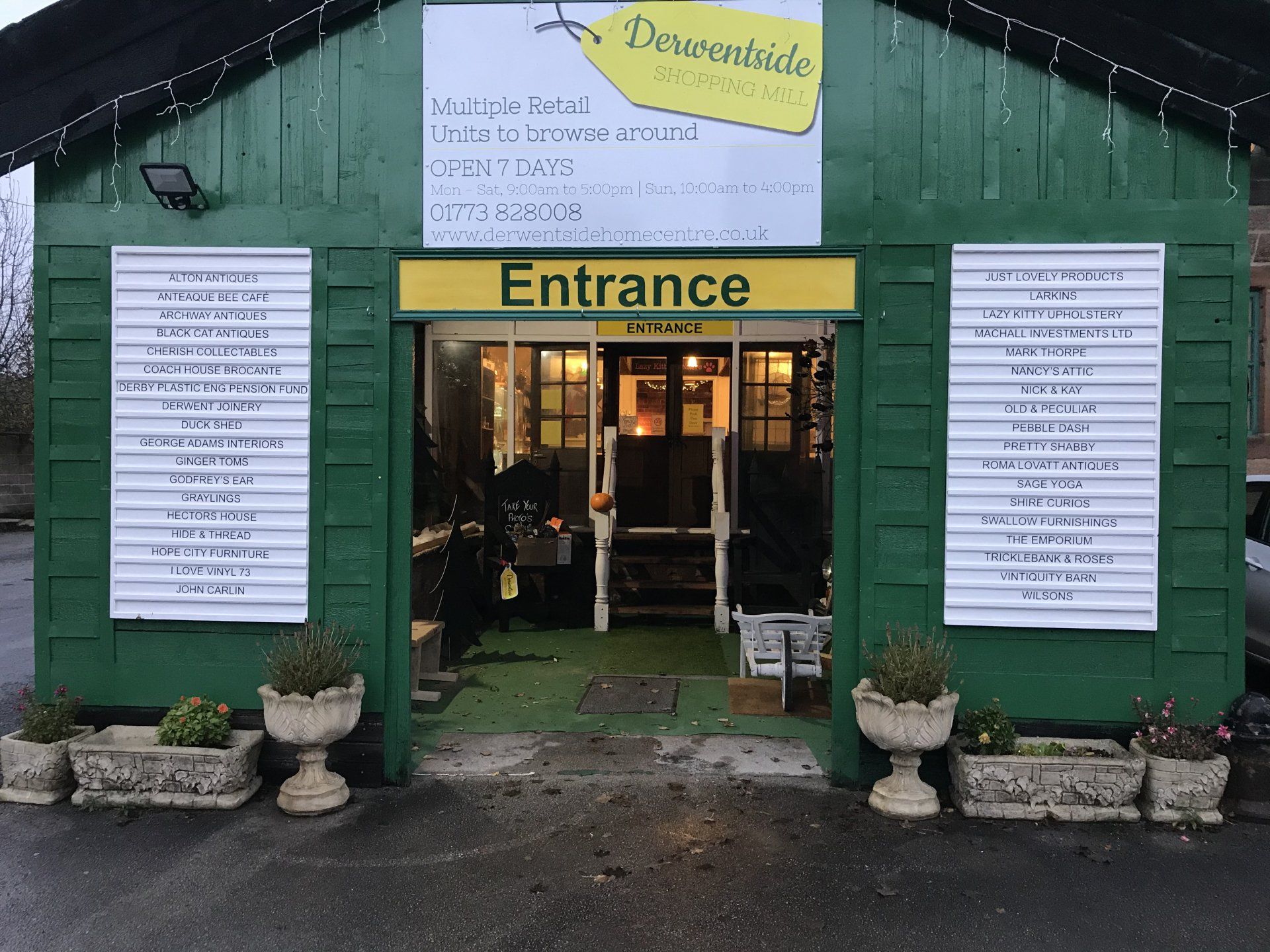
Derwentside Shopping Mill
From Unity Mill to a Belper landmark
Originally known as Unity Mill, this Grade II listed building has played many roles during its long history—from steam-powered corn mill and cotton-thread factory to wartime offices and the shopping destination we know today.
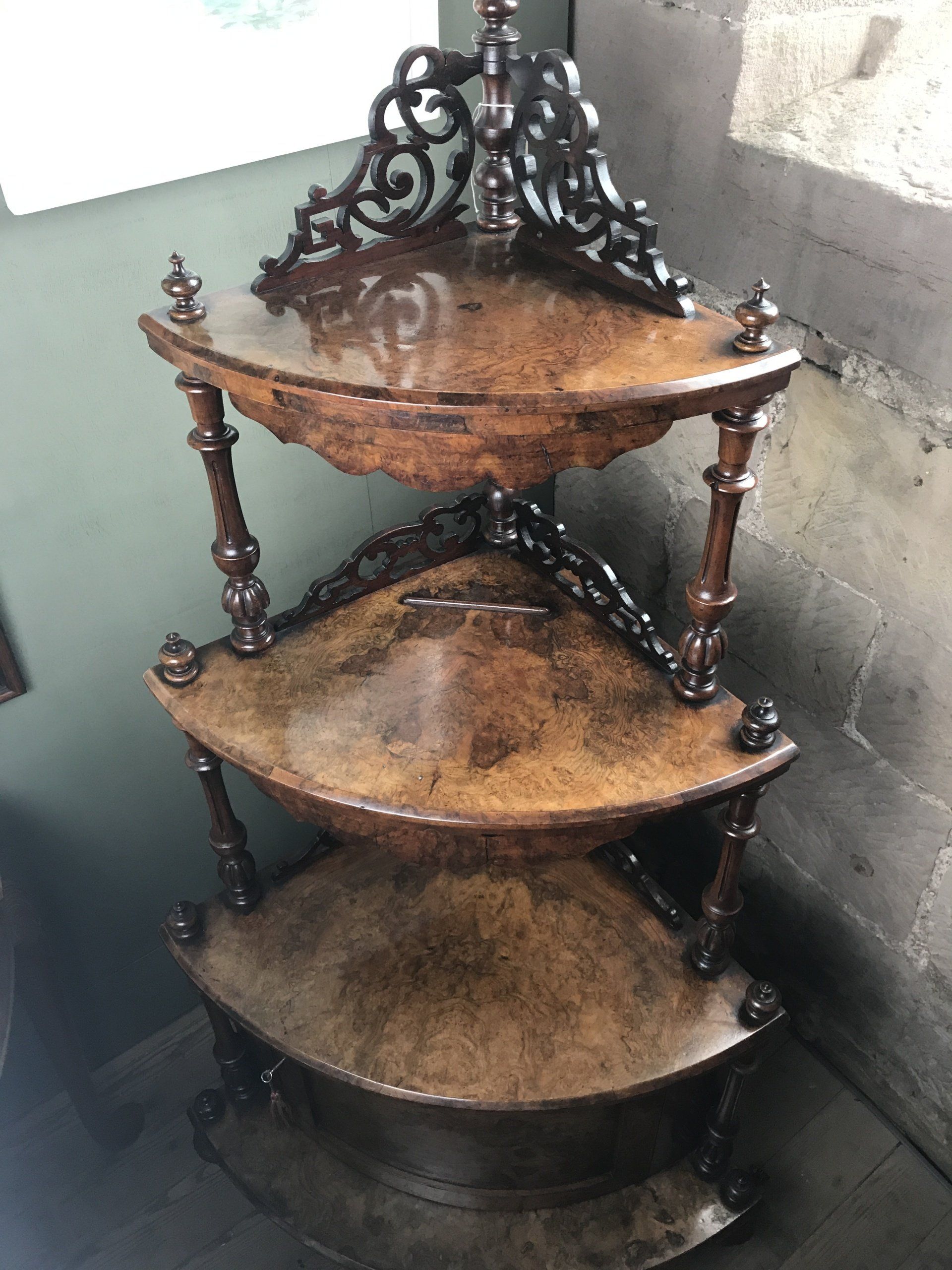
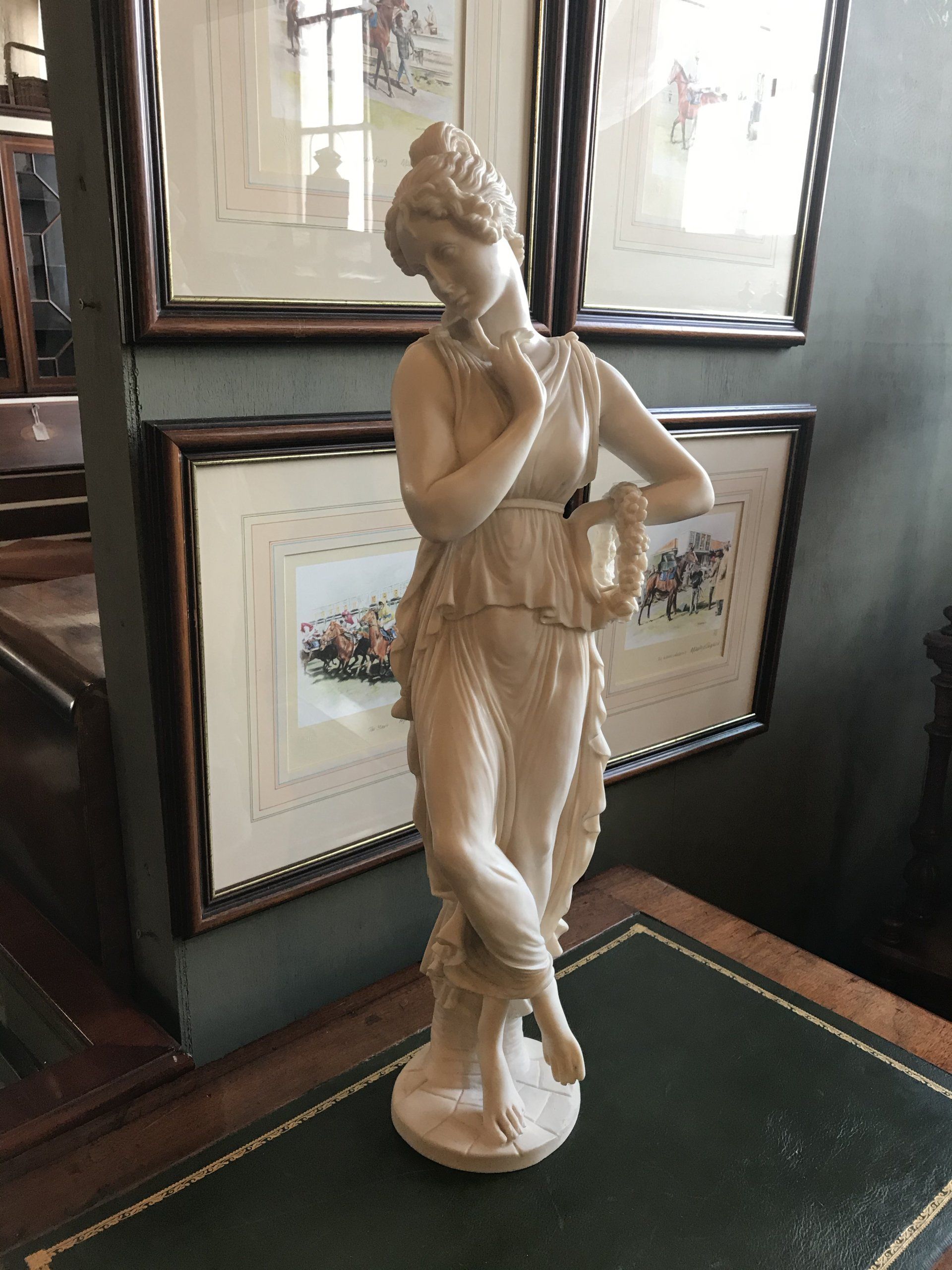
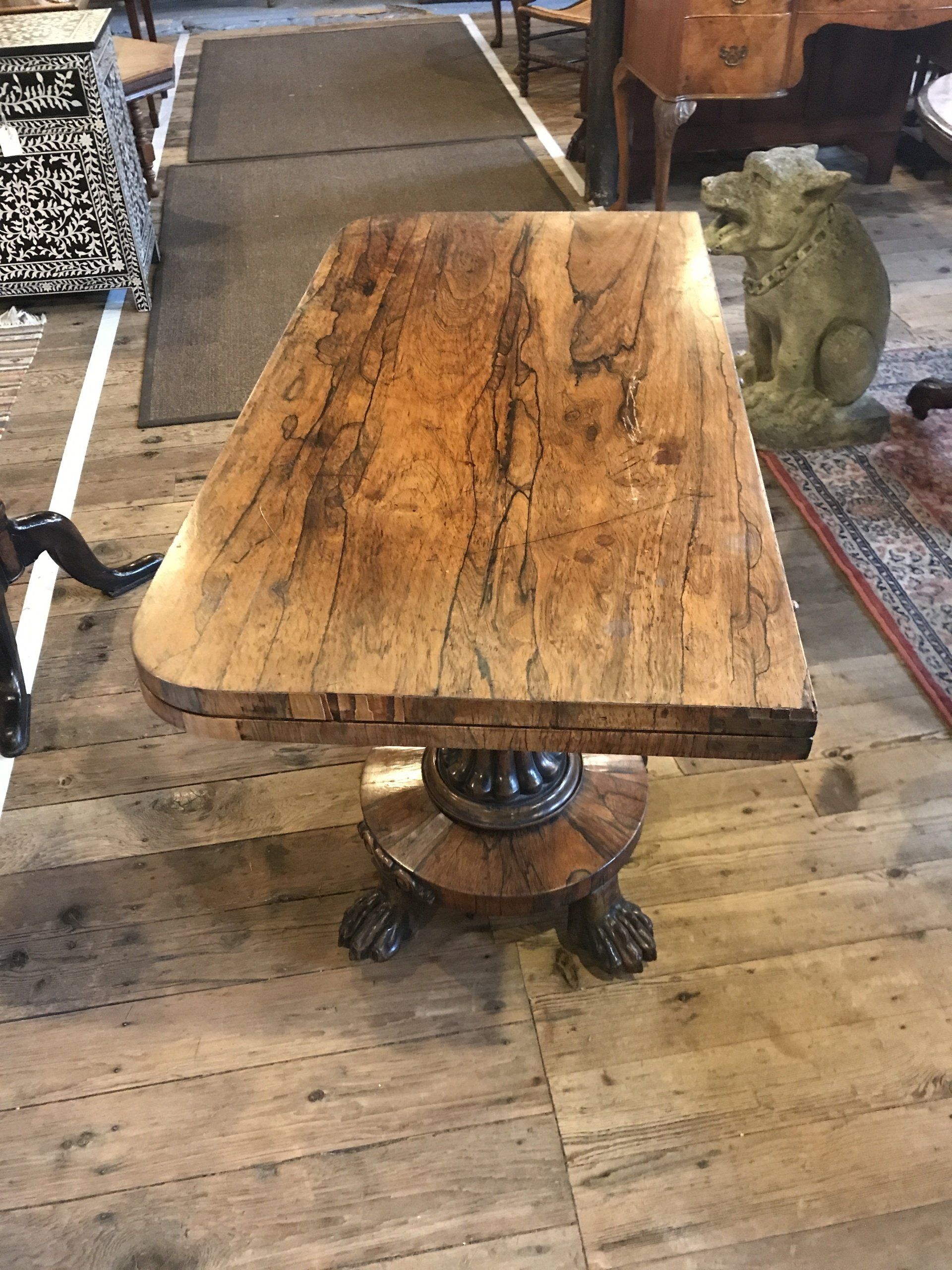
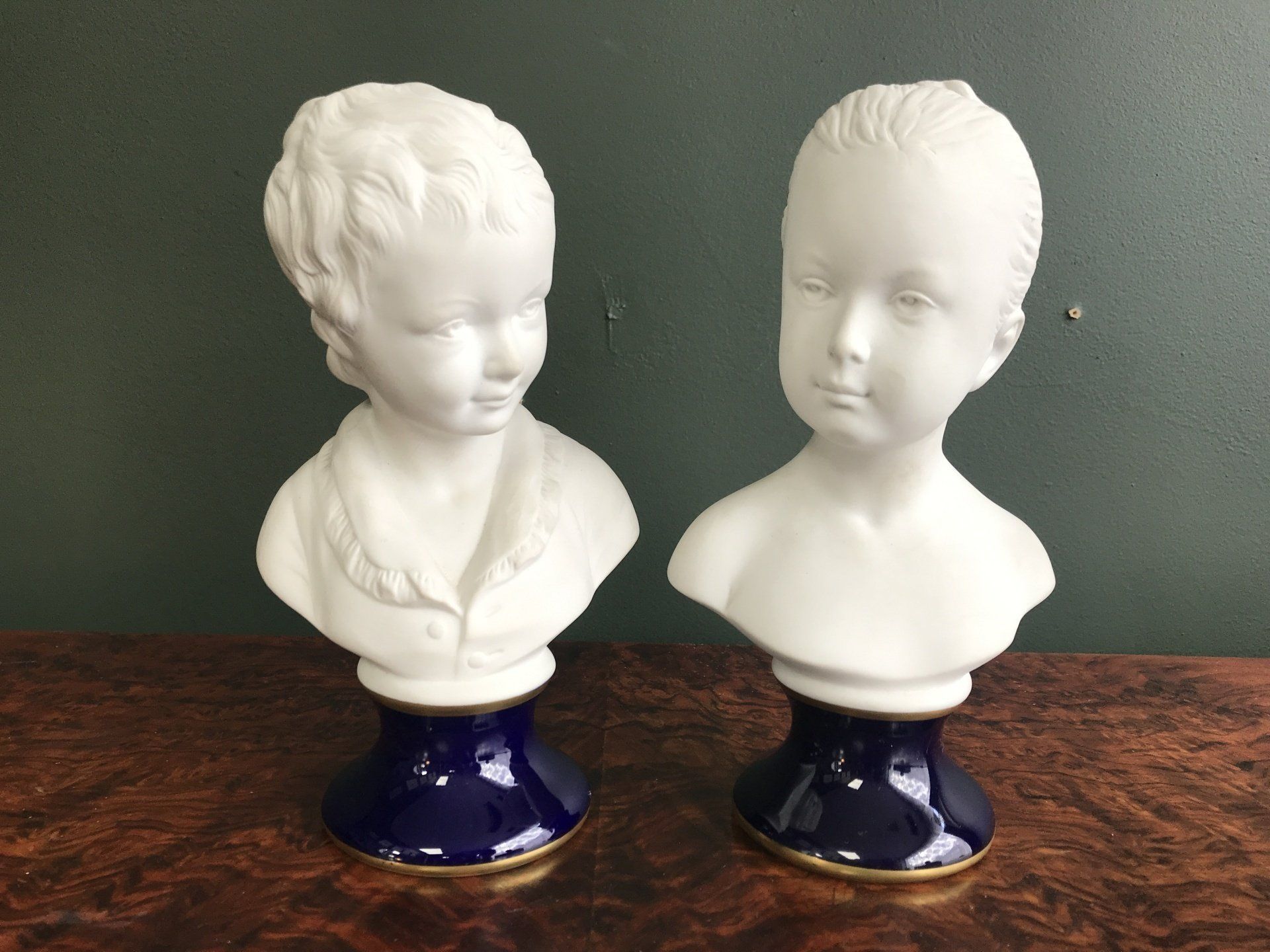
Larkin’s Antiques is located on the first floor.
The Story of Unity Mill
From Estate Land to Steam Mill
The site on which Unity Mill stands was once part of the extensive Duffield manor estate, then associated with Richard Paul Jodrell. In 1798 the land was sold to local businessman William Walker, who later sold it to John Whitaker, proprietor of the Red Lion Inn across the road. At that time, the land appears to have been used as stabling for the inn.
Around 1836 the site was acquired by James Webster. He built a relatively small steam-powered corn mill and bakery in 1839, forming the beginnings of the building we see today.
Expansion under the Strutts
In 1853 the mill was sold to John Strutt for £2,500. He expanded it into the substantial four-storey building and installed two 30-horsepower beam engines, together with machinery reportedly costing more than £7,000.
The building was leased to John and Humphrey Winson and operated as a steam-powered corn mill. Following John Strutt’s death in 1858, ownership passed through members of the wider Strutt family.
Industry and Changing Fortunes
The mill was sold to Nickisson and Smith in 1865 and continued producing flour. After being repossessed by the National Provincial Bank in 1872, it was advertised as the “Unity Steam Flour Mills and Bakery,” capable of grinding 700 sacks and baking 250 sacks each week.
In 1875 it was acquired by W. M. Manlove and became a cotton-thread factory. The building later returned to the Strutt estate and, from 1905, was leased by furniture manufacturer William Holden, whose business employed around 100 people. Manufacturing eventually ceased, although retailing continued until the mill closed in 1930.
A Remarkable Escape
One of the mill’s most extraordinary stories appeared in the Derby & Chesterfield Reporter in September 1866. During excavation work on a well supplying the steam engines, the ground collapsed beneath a workman, burying him in a sitting position with soil piled heavily around his legs.
His fellow workers dug him out and cut an opening through the well lining to reach him. Hundreds of people gathered as the rescue continued for several hours. The trapped man was reportedly given generous quantities of brandy as a stimulant and became increasingly talkative while awaiting rescue!
Remarkably, he was eventually brought out without serious injury—although the report jokingly suggested that he may have suffered a sore head the following morning.
From Wartime Offices to Shopping Mill
During the Second World War, Unity Mill was used by Rolls-Royce and is believed to have housed planning and wages offices. It later became home to the German company Roehms Ltd, which produced plastic colourants.
The building received Grade II listed status in 1979, recognising its architectural and industrial importance. Since the mid-1990s, it has been cared for and operated as Derwentside Shopping Mill—giving this remarkable Belper building a new purpose while preserving its historic character.